Minimalist interiors: less but right — the guide
Minimalism isn't about empty rooms but about deliberate choices. The guide to minimalist interiors: principles, colours, common mistakes — and how to test the style with AI.
Läs den här artikeln på svenska →
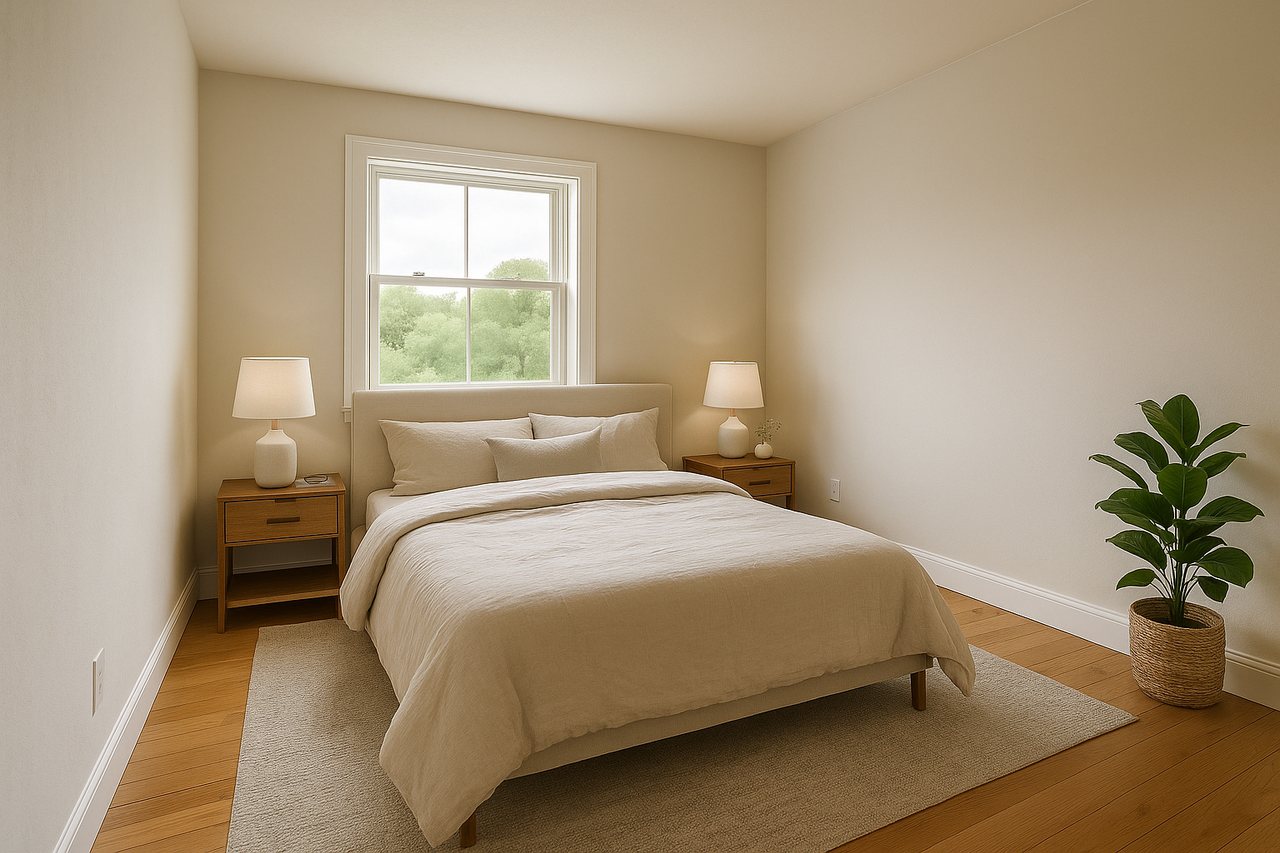
Minimalist interiors are the most misunderstood of the major styles. It isn't about owning nothing — it's about everything you see being chosen. A minimalist room doesn't feel empty but calm, and the difference lies in three principles.
The three principles
1. Every object earns its place
The question isn't "can it go here?" but "does it make the room better?". Furniture that only fills space goes out. What remains is what's used and what's beautiful — ideally both.
2. Empty space is an ingredient
The empty wall and the clear floor aren't waste — they're what lets the rest show. Minimalists talk about negative space as something you decorate with.
3. Calm palette, rich materials
When the colours are few, the materials have to carry: wool, wood, stone, linen. That's why real minimalism rarely feels cheap — every surface is scrutinised.
Common mistakes
- Clearing without replacing — the room becomes poor instead of calm
- White only: without texture it turns sterile; vary materials instead of colours
- Furniture too small: minimalism likes fewer but larger, calmer volumes
Test before you clear out
The nice thing about trying minimalism digitally: you see the end result before carrying out a single piece. Upload a photo of the room and write "minimalist style, few pieces, calm tones, natural materials" — then decide whether it's worth the clear-out.
See your room minimalist
Upload a photo and try the style free — 3 images, no card needed.
Try it free