Japandi: the style taking over — and how it looks in your home
Japandi blends Japanese minimalism with Scandinavian warmth. Its hallmarks, palette and furniture — and how to test japandi in your own room with AI in one minute.
Läs den här artikeln på svenska →
Japandi is where Japanese minimalism meets Scandinavian cosiness — and one of the most searched interior styles of recent years. The result is rooms that feel calm without being cold, pared-back without being empty. Here's how to recognise the style, and how to see it in your own home before buying a single piece.
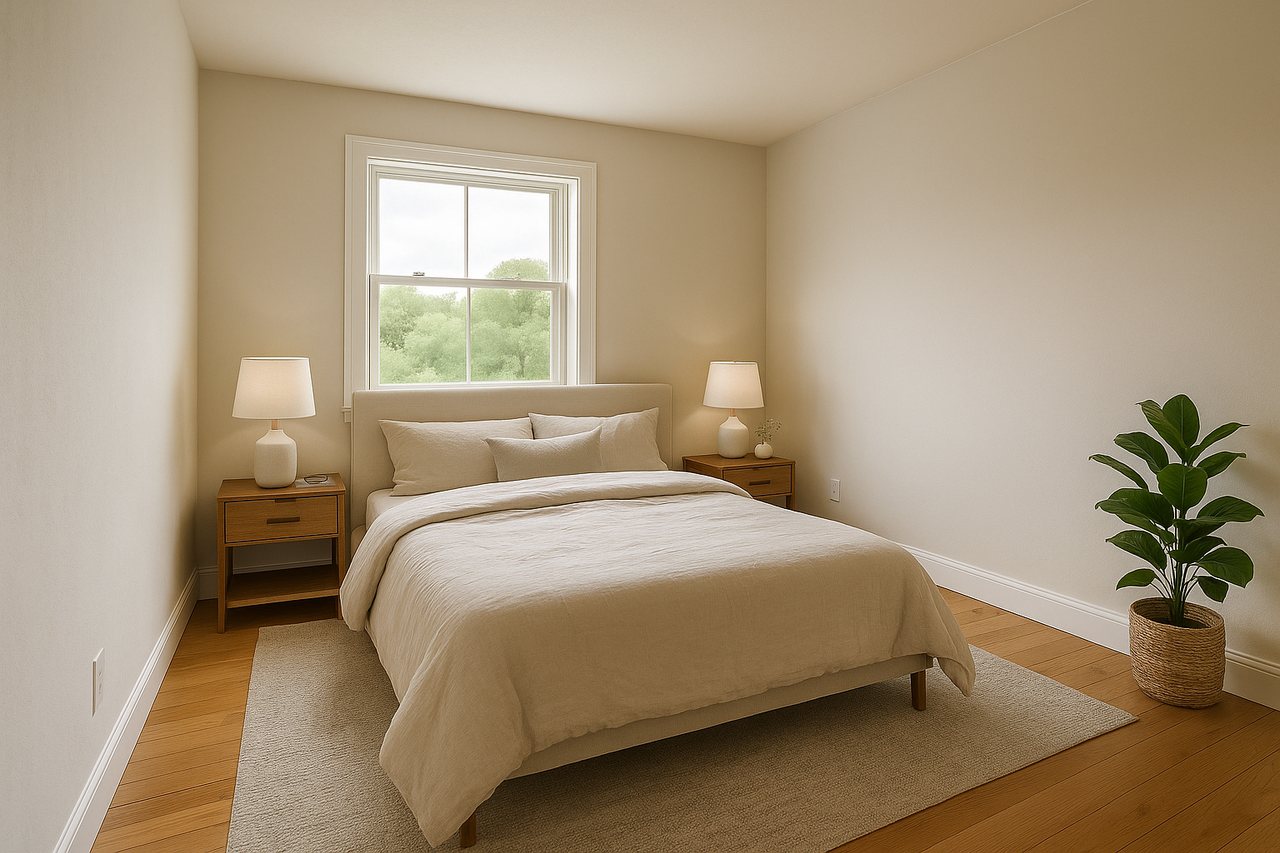
What makes japandi japandi
- Muted earth tones: beige, sand, taupe, soft black
- Low furniture in darker woods, often with rounded forms
- Wabi-sabi: imperfection as part of the beauty — ceramics, linen, raw surfaces
- Fewer things, more emptiness — every object gets room to breathe
- Plants and natural materials as the only "decoration"
How it differs from pure Scandinavian style
Scandinavian is lighter and airier; japandi is warmer and darker in tone, with more emphasis on craft and stillness. If Scandinavian style is a bright summer morning, japandi is a calm evening. Many homes land somewhere in between — and that's exactly right.
Bringing japandi home
Start by removing rather than adding: fewer pieces, fewer objects. Then shift the tones — light textiles toward sand and beige, glossy surfaces toward matte. A low bed or sofa, a ceramic vase and one large green plant take you most of the way.
See it in your room first
Unsure whether japandi suits your room? Upload a photo and type "japandi style with earthy tones and low furniture in dark wood". One minute later you'll see the answer for real, in your own light.
Try japandi in your home
Upload a photo and see your room in japandi style in a minute. 3 free images, no card needed.
Try it free